Paul A. Romsky Jr. - Retrobrighting 1970's Plastics
This page contains information on removing the yellowing of plastics used in the 1970's.
Many plastics used in 1970's consumer goods had additives (mainly Bromine) to make them more flame retardent. Ultra Violet (UV) light from the Sun and fluorescent lights, Oxygen from the air, and heat, reacts with these additives and causes them to yellow or brown over time. Retrobrighting is a process where placing the plastic in a bath of 3% Hydrogen Peroxide (an inexpensive common supermarket item in the USA) and then appling UV light (mostly in the UVB and UVA bands), the yellowing can be removed. Higher concentrations of Hydrogen Peroxide (up to 12%) can be used, but it is more expensive and a bit more difficult to obtain. Also, the item can be coated with a Hydrogen Peroxide gel and then wrapped in clear plastic wrap and set in direct sunlight for 4 to 8 hours (more if the yellowing is severe), however, in northern latitudes and/or during the winter months, not much of the Sun's UVA and UVB rays make it to the surface of the Earth and thus the process may require 3 days or more. Retrobrighting can make the plastic brittle if strong concentations of Hydrogen Peroxide and prolonged heat is used, so it is best to use lower concentrations and monitor the progress carefully in a low heat environment.
Many clear plastics and glass can block some of the UVB light (UVB light is critical to speeding up the process). Pyrex glass, however, will let most of the UVB rays and almost all of the UVA rays though. To save money, I purchased a Reptile Health lamp from Amazon. It is an 18W bulb that outputs 10% UVB and over 20% UVA light. This nearly mimics sunlight. To save even more money, I retrobright one side of the plastic at a time in a shallow bath of Hydrogen Peroxide and light it from beneath a Pryrex dish. I made a fixture out of scrap wood to hold the dish about 6 inches (150 mm) above the lamp. I covered the top side of the dish with clear plastic food wrap to prevent evopration. I carefully lined the gooseneck lamp reflector with Aluminum foil to get the best radiation pattern. I then covered the entire fixture with a towel to shield the stray UV light from pets and onlookers. The towel also helps the Hydrogen Peroxide warm slightly from the heat of the lamp - this helps in the retrobrighting process.
With moderately yellowed and browned plastic, I am able to get the plastic back to its original color in about 8 hours per side.
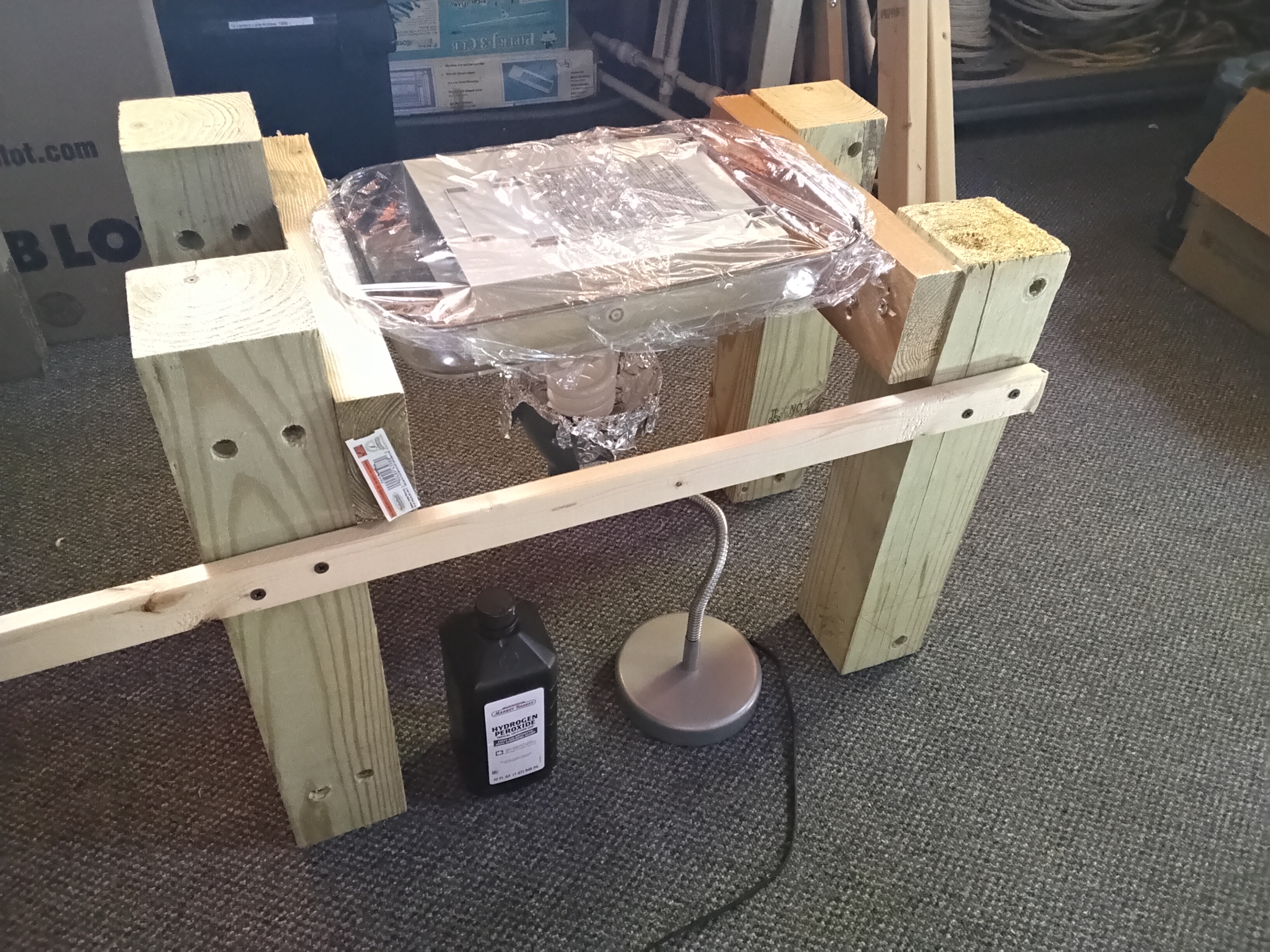
Retrobright Pyrex Dish and UV Lamp Fixture
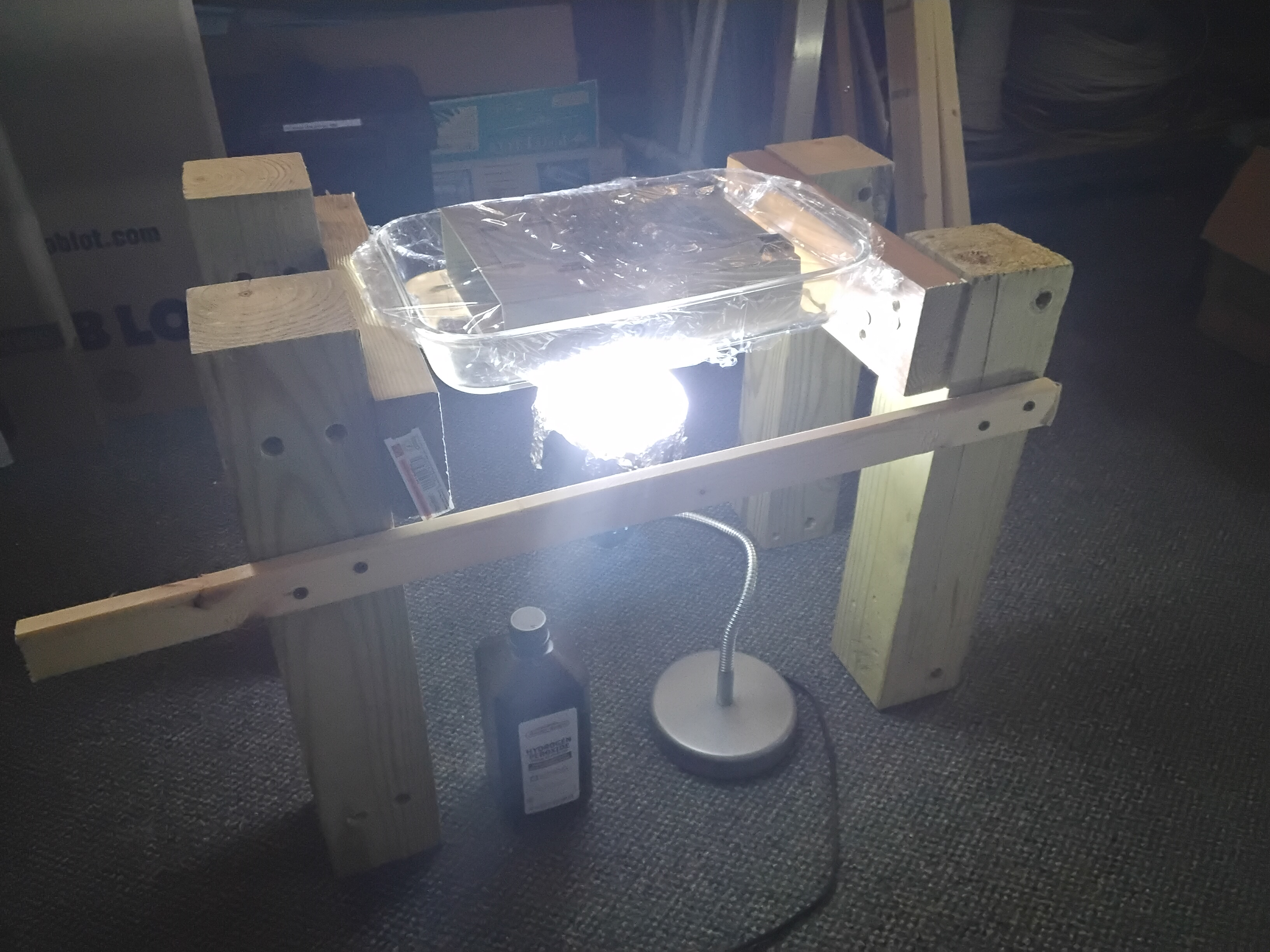
Retrobright Fixture Lit with a UVB 10% Lamp
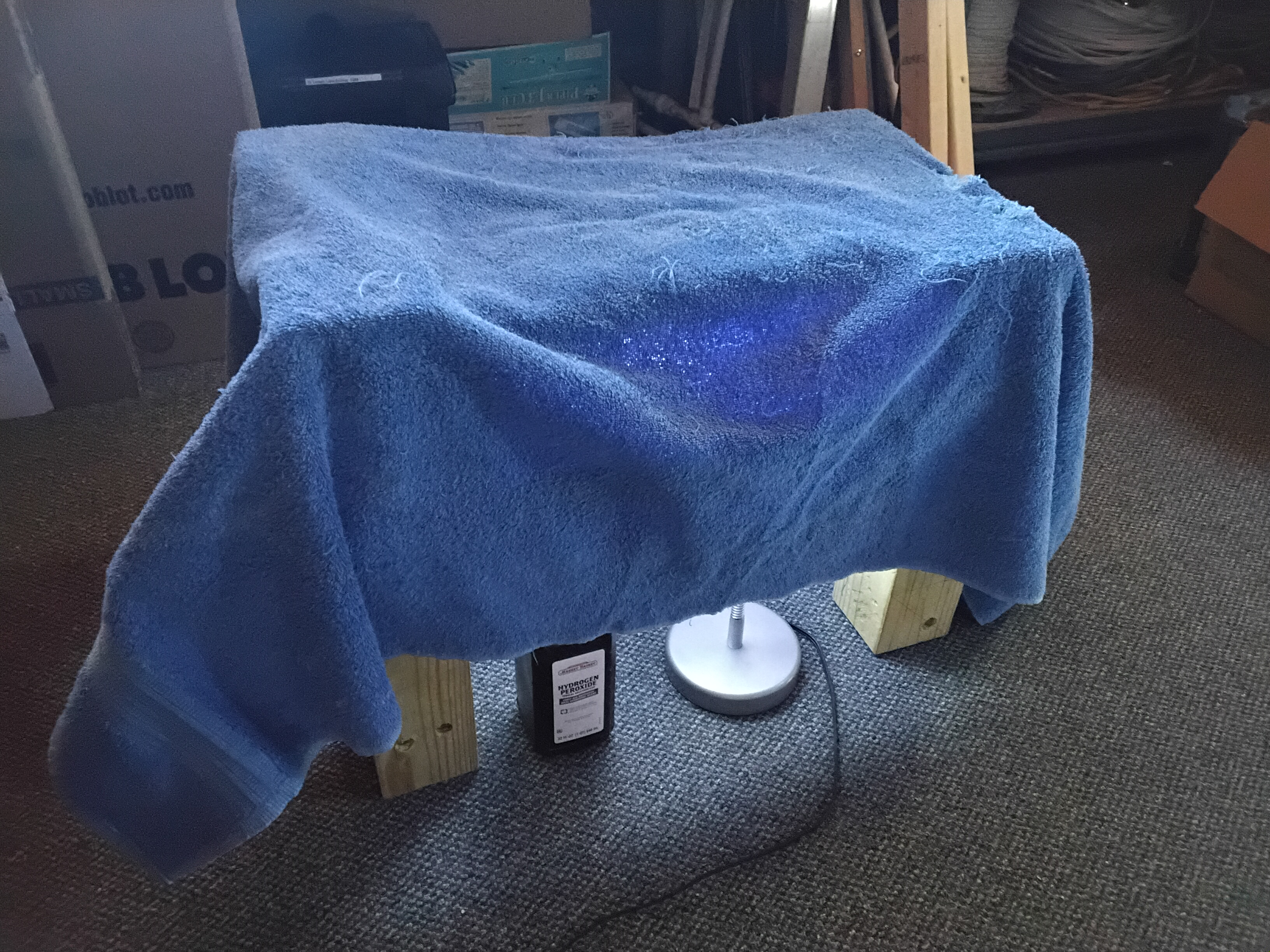
Retrobright Fixture Covered
Home